

- Beranda
- Komunitas
- Entertainment
- Lounge Pictures
UPHOLDING TRADITION, UPTICK DISCRIMINATION

TS
dewaagni
UPHOLDING TRADITION, UPTICK DISCRIMINATION
UPHOLDING TRADITION, UPTICK DISCRIMINATION
Posted on July 5, 2015 by arimendrofa
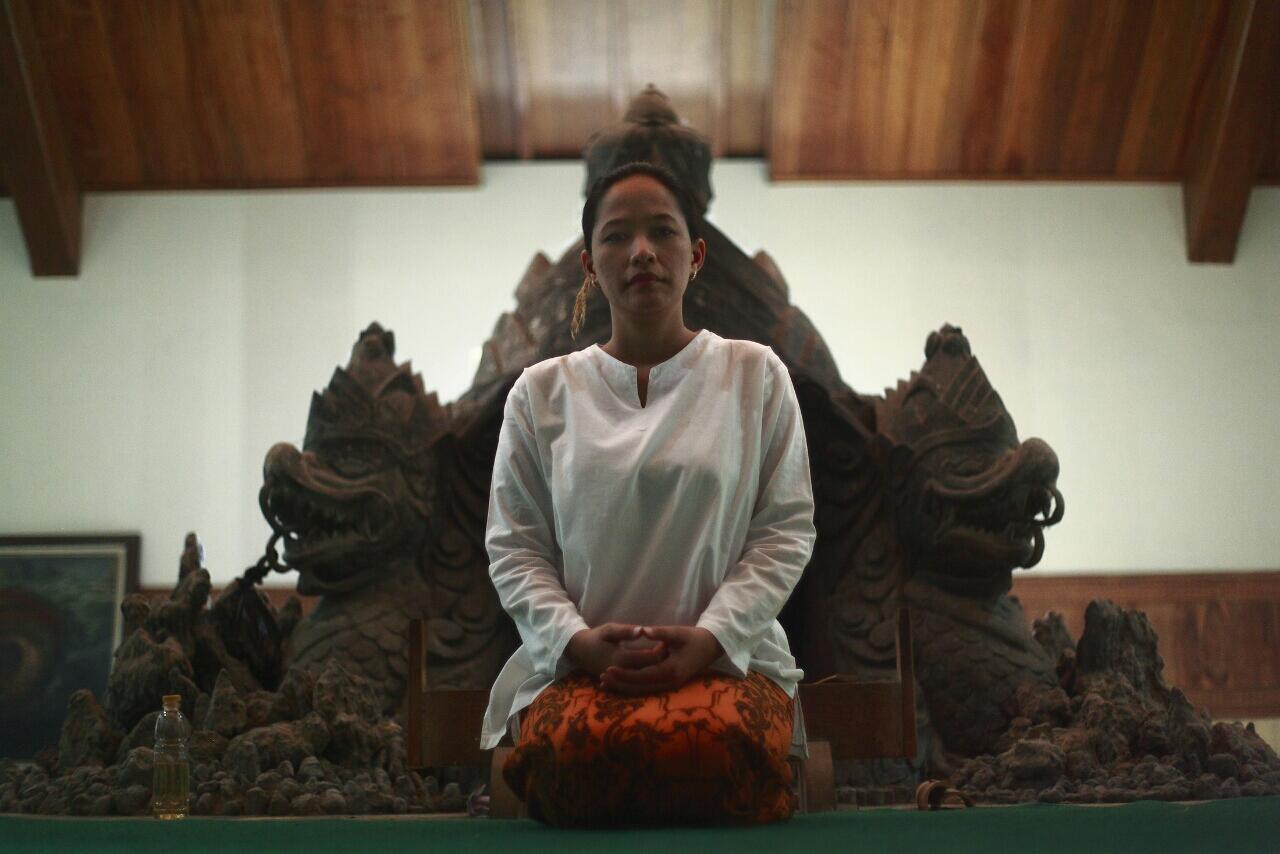
Dewi Kanti is sitting in the sacred room called “Dapur Ageung”, where the elder of Sunda Wiwitan perform the ritual.
A woman dressed in a white long sleeve wtih leaves hanging in her hair – she sits cross-legged facing a fireplace. A unique fireplace decorated with dragon statues on its four corners, she brought together the pieces of bamboo to only burn it there. She then close her eyes and went into meditation.
Dewi Kanti, 40, is her name. She is an adherent of Sunda Wiwitan, an indigenous religion which still practiced by traditional Sundanese community in Indonesia. The adherents are scattered in various areas in West Java, including in Cigugur, Kuningan, where Dewi along with about 1,000 other followers still practice this religion. However, this religion is not recognized as one of the official religion in Indonesia – making its adherents often facing a surge of discrimination, particularly in civil right as a citizen and religion devotee.
Dewi Kanti, the great-granddaughter of the leader of Sunda Wiwitan in Indonesia, is leading the campaign for state recognition of the minority religion to end discrimination against her and fellow adherents, including the deprivation of their civil rights.
“The religion status on my first identity card was listed as Islam. Second listed as a cult. Eventually revised and were given a dash,” she said continuing with an explanation on how she struggled from 2005 to 2008 to get the rightful identity card.
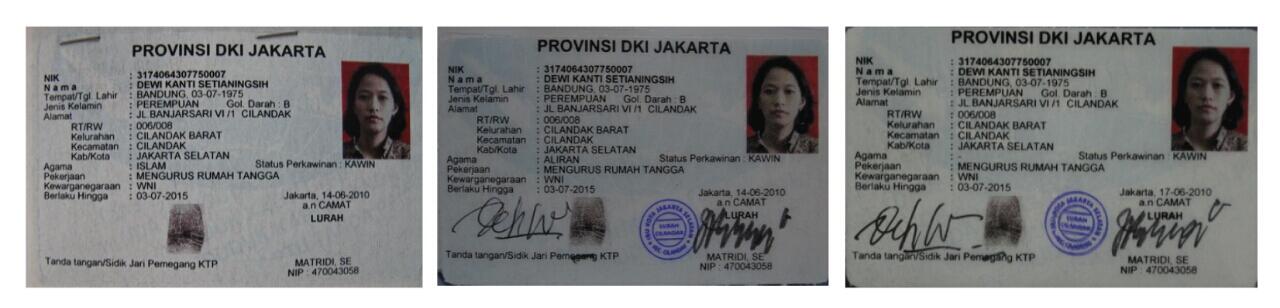
Dewi’s ID which revised two times. (Dewi Kanti)
Having that option of the Sunda Wiwitan religion column in identity cards for citizen who embrace this traditional belief sytem has long debated. In 1965, the government issued the law number 1 of 1965 on the Prevention of Abuse and / or Blasphemy on Religion. The explanation of article 1 stated that there are six religions embraced by Indonesian citizen, raging from Islam, Christianity, Catholicism, Hinduism, Buddhism, and Confucianism. The law never recognized the existence of Sunda Wiwitan.
Not only this affects them through the empty column of their religious status in their identity, they also face the challenge to obtain important documents issued by the government, such as a marriage and birth certificates, to name a few. Rusman, 66, a retired civil servant, said the wedding he had with his wife 1981 cannot be registered in civil legalities.
“I could not get a marriage certificate. I was considered as an single. Which means I couldn’t attain the family monetary allowance from the workplace,” said Rusman who formerly worked at the Department of Tourism and Culture in Kuningan.
The difficulty in obtaining a marriage certificate has an impact on the issuance of birth certificates. Sri Wulandari, 20, has been trying for two years to apply for her birth certificate with the Civil Registration in Kuningan. But to no success.
On her fourth attempt last March, Sri was accompanied by Dewi. Dewi asked the officer on why Sri and other followers could not receive the rightful birth certificate.
“A birth certificate is a right identity must be provided by the state without exception,” said Dewi.
“Yes, it is. We provide these documents,” the official replied.
“But what is the purpose of this form?,” asked Dewi while showing a sample form issued by Civil Registration in Kuningan. The official who is still new at his job was overwhelmed and confused. He then called the other official to explain the problem.
The form is a waiver, where it is stated that the applicants are willing to not include the name of the father on the birth certificate. This occurs due to customary marriages performed by adherents of Sunda Wiwitan considered legally valid.
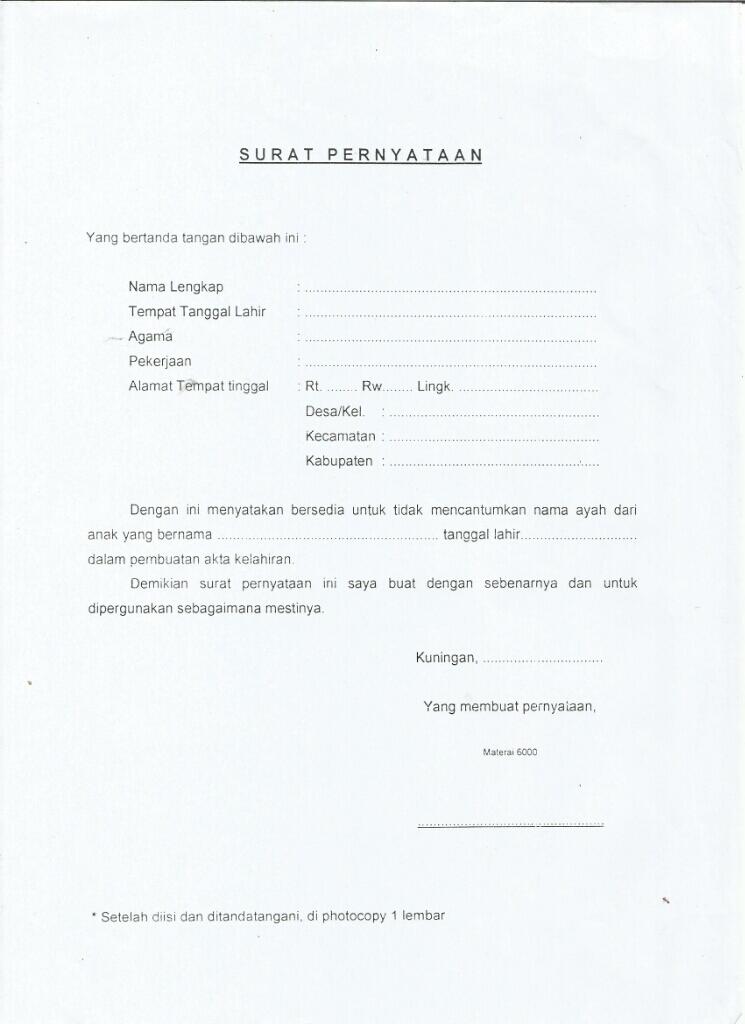
A waiver which issued by Civil Registration in Kuningan.
Documentation of marriage set out in article 2 of law number 1 of 1974. The law states that marriage is valid if it is done by the law of each religion. This includes customary law.
“The statement letter on their marriage is not legally valid. The leader must be recognized as a traditional leaders by the Ministry of Culture and Tourism,” says KMS Zulkifli, head officer of Population and Civil Registration in Kuningan.
Zulkifli has approached the leaders to help him to be recognized. He was promised to have this issue resolved within a month.

The long journey of Sunda Wiwitan
The existence of Sunda Wiwitan beliefs in Cigugur is not far anf disconnected from the role of Kiai Madrais, a Cigugur indigenous community leader who dig back the old values of spirituality of Sunda Wiwitan. In 1900s, Kiai Madrais managed to evoke the spirit of nationalism of Sundanese community. At that time, the Dutch colonized Indonesia. His broad view that the need of higher power by the community to realize that every human being has an equivalent right to live freely.
The nationalism and humanity values that he teaches was considered as a public-order crime by the Dutch Colonist. In 1908, Ki Madrais was exiled to Boven-Digoel for three years. Later, the Dutch identify her teaching as Agama Djawa Sunda (ADS), or also known as Java Sunda Teaching.
In the early period of independence, the government of Indonesia accommodated the Sunda Wiwitan and other traditional belief system under mysticism. In 1955, Indonesian Congress of Faith Board was formed to institutionalized these beliefs system. Sunda Wiwitan terms as ADS on its member. The term then trapped Sunda Wiwitan into a communist stigma. At that time, the Islamic Armed Forces of Indonesia (DI/TII) performed the physical assault against the society. Their place of worship was burned.
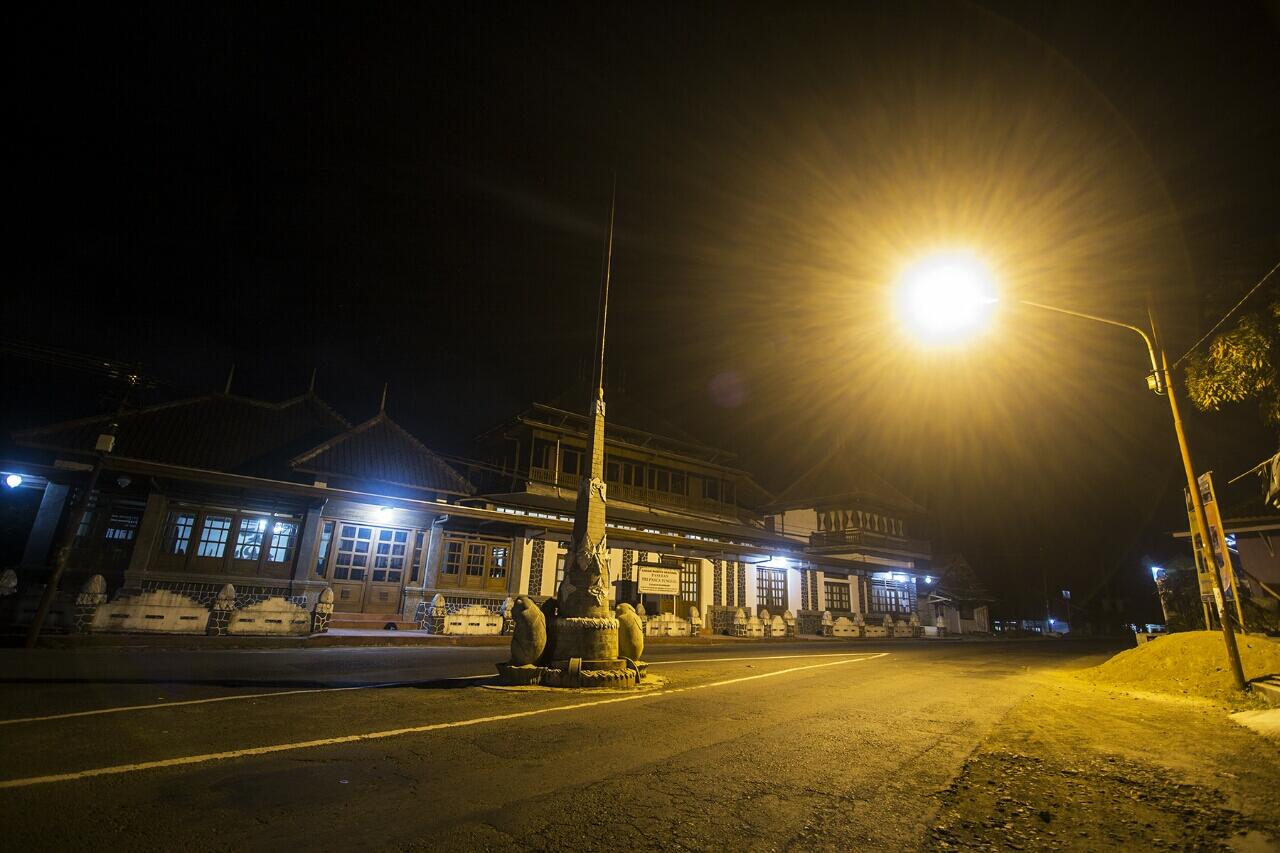
Paseban Tri Panca Tunggal, a cultural heritage located in Cigugur, Kuningan. The custom building of Cigugur indigenous community had burned by Islamic Armed Forces of Indonesia (DI/TII) in 1954.
In 1964, Tedjabuana, Kiai Madrais’ son, led the Cigugur indigenous communities. He then issued a policy gives freedom to its fellow adherents to embrace one of the religion which is considered to be authorized by the state. The decision was made to avoid the criminalization of the adherents. They obeyed the policy by change the status of their religion into Catholicism, Protestantism or Islam.
The atheists stigma them came about. It was increasingly attached when the government issued the law Number 1 of 1965 on the religion professed by the Indonesian citizen. The law puts the followers into a corner and involves a public mindset that since Sunda Wiwitan is not in one of the recognized religion. The majority then consider that Sunda Wiwitan beliefs are not ‘right’ as they are deemed godless, an atheists or even a communist.
In the early 1980s, Djatikusuma, 82, who continued his duties as a community leader, reaffirming his religion status to Sunda Wiwitan religion status. The other people who are still faithful to the Kiai Madrais teaching also follow his move.
Meanwhile, the government issued a policy that the religion column for Sunda Wiwitan followers were given a dash. It was not a mutually beneficial solution since the stigmas as atheist still attached to the adherents.
“I was imprisoned for three months. I obeyed the decision even though I do not feel I have violated the law, ” said Djatikusumah, who was jailed due to certify the marriage which is considered illegal.
The political pressure still continues. The government believed that based on the reason of performing a ritual of hearsay also banned Seren Taun, an annual traditional ceremony held by the community as an expression of their gratitude to the Almighty. This rice harvest festival is held every 22 Rayagung, the last month of Sundanese calendar.
“The government directly destroying our ritual tools which we had painstakingly prepared. The event was very traumatic. The elders and other community could not do anything, ” says Dewi, who was 4 years old when the incident occurred.
Still vivid in her memory, the psychological distress experienced by the community after the attack continues. It was a period of deep anguish and pain for her and other followers.
Fight silently
The banning of Seren Taun for 17 years does not put the follower of Sunda Wiwitan into silence. They still perform the tradition silently. This involves the celebration of the community where they peel each rice seeds grain by grain.
At that time, however, they want to show that without the recognition of Sunda Wiwitan, the commnunity can still produce the Sabilulungan or togetherness in treating tradition though not openly.
“We never felt like a victim. But we, as human beings, have the responsibility to show the country and the community. There is one situation in which erroneous religious understanding could twist that negates the sides of humanity,” says Dewi.
In 1999, the community was able to celebrated the Seren Taun openly after Abdurrahman Wahid, the fourth President of Indonesia gave his support. He attended the event. Seren Taun become a symbol of pluralism of the Cigugur society. Not only adherents can celebrate it. The majority of religious believers also participated.
“Many of our people are involved in the ceremonies. They are also part of the indigenous community. Sunda Wiwitan is the roots of their many traditions. When Seren Taun is held on Sunday, I adjust the schedule so they can still go to the church,” said Yayan Suryana, a priest in Cigugur.
The struggle is a long way
The discrimination against Dewi and other fellow adherents has not cowed her into silence. Since 1999, she was involved in the Interfaith Youth Movement. Here, she made a visit to the majority religious communities with the aim to change the mindset or understanding of the general public toward our existence and beliefs.
She also continues her father activities, Djatikusumah, in Indonesian Conference of Religion and Peace (ICRP). The objective is to establish communication between religious members of the ICRP for open dialogue.
Now she is active in Bhinekka Tunggal Ika National Alliance which is a consolidation tool with a variety of indigenous communities, particularly communities that still preserve their ancestral religion or traditions.
“Indeed, the efforts that I have been doing has not been fruitful as to what we hoped. The issue of the recognition of ancestral religions marked very differently by the government agenda,” says Dewi, who met the legislative and executive councils in Jakarta on many occasions.
Together with the other elders, she also make an effort to strengthen the community internally. They provide the children avenue and direction on how to forward them to have a confidence as an indigenous children. Every week, they do Surasa or discussion. The event is to digging deeper into the understanding the values of Sunda Wiwitan.
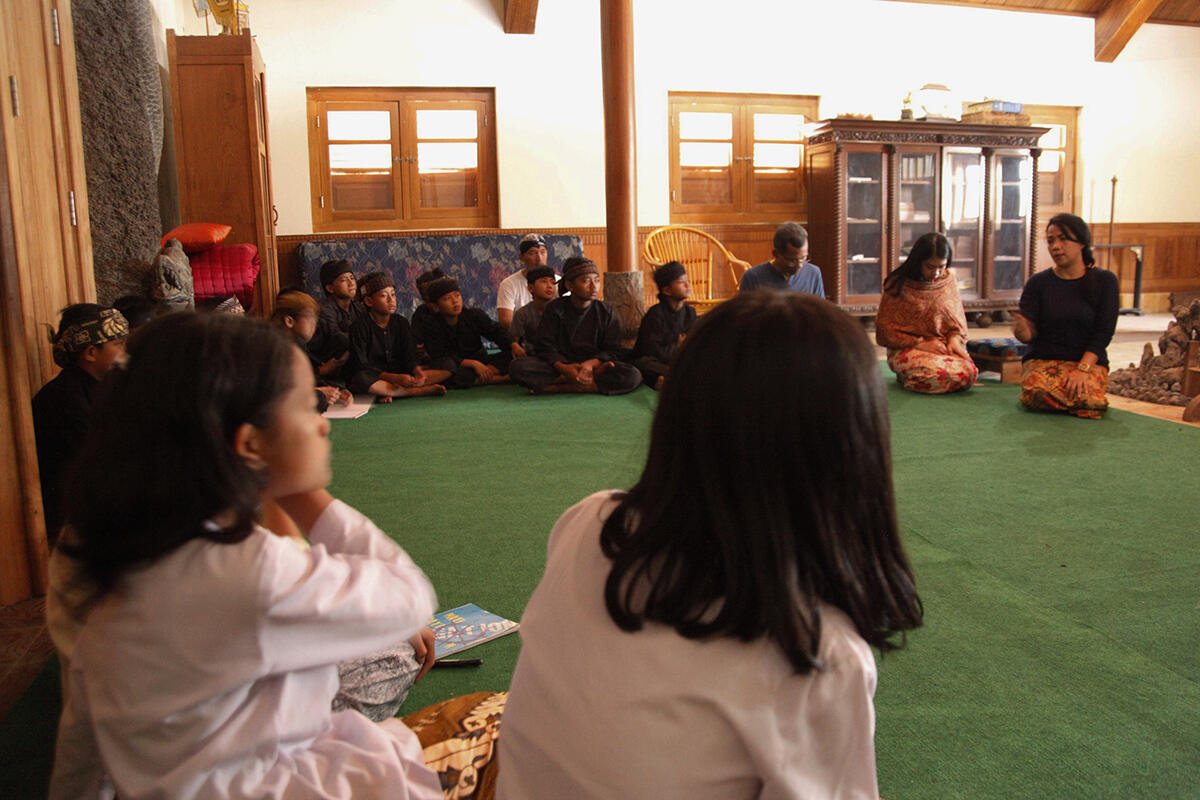
A number of children gathered to discuss the Sunda Wiwitan teaching on the weekly event called “Surasa”.
“We discuss the problems they encountered in their individual environment. We also transform the value of Sunda Wiwitan teachings through the art and culture. The point is in education,” says Dewi.
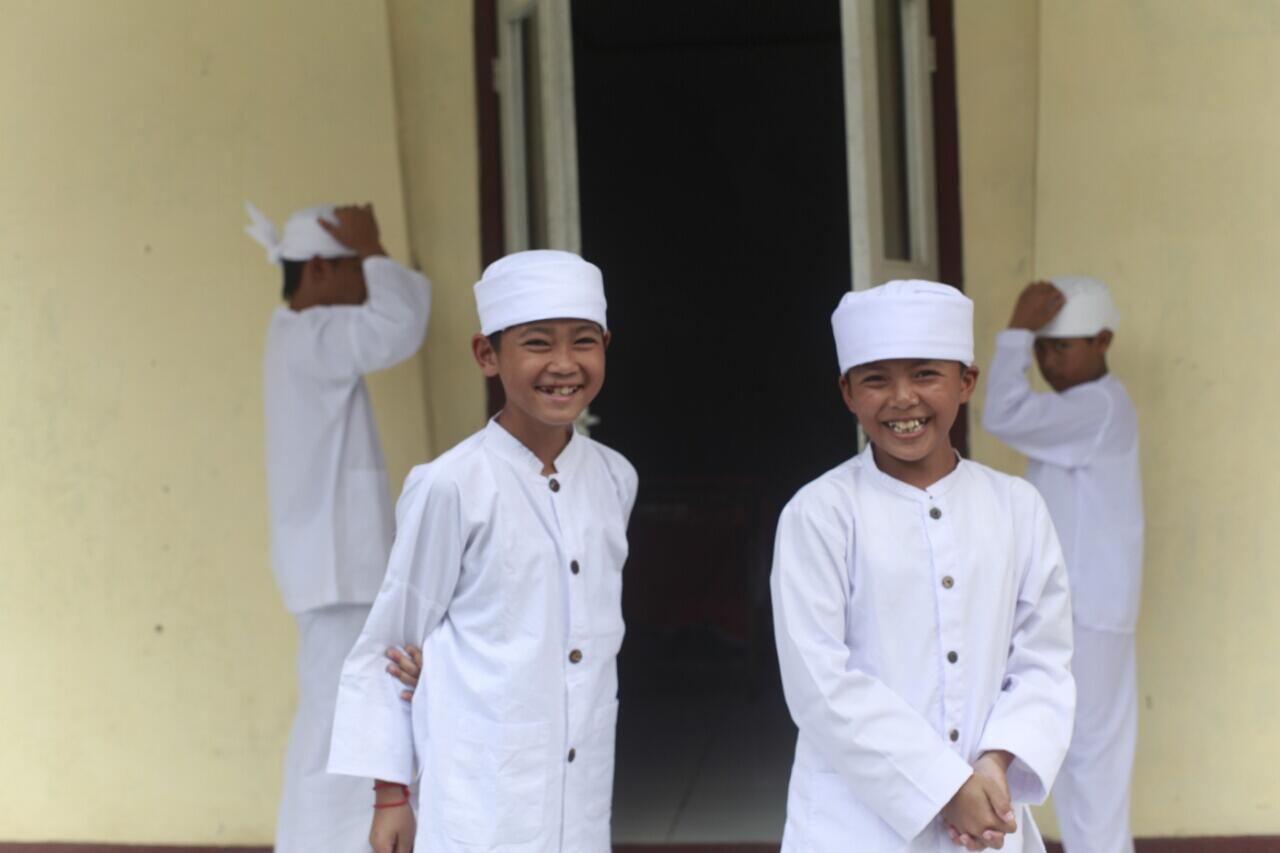
Four childrens were prepared to attend the religious occasion. They are the next of Kiai Madrais.
“We feel that maintaining it is not solely for the sake of legality, but how to maintain it with integrity,” she concludes.
https://arimendrofa.wordpress.com/20...iscrimination/
Posted on July 5, 2015 by arimendrofa
Dewi Kanti is sitting in the sacred room called “Dapur Ageung”, where the elder of Sunda Wiwitan perform the ritual.
A woman dressed in a white long sleeve wtih leaves hanging in her hair – she sits cross-legged facing a fireplace. A unique fireplace decorated with dragon statues on its four corners, she brought together the pieces of bamboo to only burn it there. She then close her eyes and went into meditation.
Dewi Kanti, 40, is her name. She is an adherent of Sunda Wiwitan, an indigenous religion which still practiced by traditional Sundanese community in Indonesia. The adherents are scattered in various areas in West Java, including in Cigugur, Kuningan, where Dewi along with about 1,000 other followers still practice this religion. However, this religion is not recognized as one of the official religion in Indonesia – making its adherents often facing a surge of discrimination, particularly in civil right as a citizen and religion devotee.
Dewi Kanti, the great-granddaughter of the leader of Sunda Wiwitan in Indonesia, is leading the campaign for state recognition of the minority religion to end discrimination against her and fellow adherents, including the deprivation of their civil rights.
“The religion status on my first identity card was listed as Islam. Second listed as a cult. Eventually revised and were given a dash,” she said continuing with an explanation on how she struggled from 2005 to 2008 to get the rightful identity card.
Dewi’s ID which revised two times. (Dewi Kanti)
Having that option of the Sunda Wiwitan religion column in identity cards for citizen who embrace this traditional belief sytem has long debated. In 1965, the government issued the law number 1 of 1965 on the Prevention of Abuse and / or Blasphemy on Religion. The explanation of article 1 stated that there are six religions embraced by Indonesian citizen, raging from Islam, Christianity, Catholicism, Hinduism, Buddhism, and Confucianism. The law never recognized the existence of Sunda Wiwitan.
Not only this affects them through the empty column of their religious status in their identity, they also face the challenge to obtain important documents issued by the government, such as a marriage and birth certificates, to name a few. Rusman, 66, a retired civil servant, said the wedding he had with his wife 1981 cannot be registered in civil legalities.
“I could not get a marriage certificate. I was considered as an single. Which means I couldn’t attain the family monetary allowance from the workplace,” said Rusman who formerly worked at the Department of Tourism and Culture in Kuningan.
The difficulty in obtaining a marriage certificate has an impact on the issuance of birth certificates. Sri Wulandari, 20, has been trying for two years to apply for her birth certificate with the Civil Registration in Kuningan. But to no success.
On her fourth attempt last March, Sri was accompanied by Dewi. Dewi asked the officer on why Sri and other followers could not receive the rightful birth certificate.
“A birth certificate is a right identity must be provided by the state without exception,” said Dewi.
“Yes, it is. We provide these documents,” the official replied.
“But what is the purpose of this form?,” asked Dewi while showing a sample form issued by Civil Registration in Kuningan. The official who is still new at his job was overwhelmed and confused. He then called the other official to explain the problem.
The form is a waiver, where it is stated that the applicants are willing to not include the name of the father on the birth certificate. This occurs due to customary marriages performed by adherents of Sunda Wiwitan considered legally valid.
A waiver which issued by Civil Registration in Kuningan.
Documentation of marriage set out in article 2 of law number 1 of 1974. The law states that marriage is valid if it is done by the law of each religion. This includes customary law.
“The statement letter on their marriage is not legally valid. The leader must be recognized as a traditional leaders by the Ministry of Culture and Tourism,” says KMS Zulkifli, head officer of Population and Civil Registration in Kuningan.
Zulkifli has approached the leaders to help him to be recognized. He was promised to have this issue resolved within a month.
The long journey of Sunda Wiwitan
The existence of Sunda Wiwitan beliefs in Cigugur is not far anf disconnected from the role of Kiai Madrais, a Cigugur indigenous community leader who dig back the old values of spirituality of Sunda Wiwitan. In 1900s, Kiai Madrais managed to evoke the spirit of nationalism of Sundanese community. At that time, the Dutch colonized Indonesia. His broad view that the need of higher power by the community to realize that every human being has an equivalent right to live freely.
The nationalism and humanity values that he teaches was considered as a public-order crime by the Dutch Colonist. In 1908, Ki Madrais was exiled to Boven-Digoel for three years. Later, the Dutch identify her teaching as Agama Djawa Sunda (ADS), or also known as Java Sunda Teaching.
In the early period of independence, the government of Indonesia accommodated the Sunda Wiwitan and other traditional belief system under mysticism. In 1955, Indonesian Congress of Faith Board was formed to institutionalized these beliefs system. Sunda Wiwitan terms as ADS on its member. The term then trapped Sunda Wiwitan into a communist stigma. At that time, the Islamic Armed Forces of Indonesia (DI/TII) performed the physical assault against the society. Their place of worship was burned.
Paseban Tri Panca Tunggal, a cultural heritage located in Cigugur, Kuningan. The custom building of Cigugur indigenous community had burned by Islamic Armed Forces of Indonesia (DI/TII) in 1954.
In 1964, Tedjabuana, Kiai Madrais’ son, led the Cigugur indigenous communities. He then issued a policy gives freedom to its fellow adherents to embrace one of the religion which is considered to be authorized by the state. The decision was made to avoid the criminalization of the adherents. They obeyed the policy by change the status of their religion into Catholicism, Protestantism or Islam.
The atheists stigma them came about. It was increasingly attached when the government issued the law Number 1 of 1965 on the religion professed by the Indonesian citizen. The law puts the followers into a corner and involves a public mindset that since Sunda Wiwitan is not in one of the recognized religion. The majority then consider that Sunda Wiwitan beliefs are not ‘right’ as they are deemed godless, an atheists or even a communist.
In the early 1980s, Djatikusuma, 82, who continued his duties as a community leader, reaffirming his religion status to Sunda Wiwitan religion status. The other people who are still faithful to the Kiai Madrais teaching also follow his move.
Meanwhile, the government issued a policy that the religion column for Sunda Wiwitan followers were given a dash. It was not a mutually beneficial solution since the stigmas as atheist still attached to the adherents.
“I was imprisoned for three months. I obeyed the decision even though I do not feel I have violated the law, ” said Djatikusumah, who was jailed due to certify the marriage which is considered illegal.
The political pressure still continues. The government believed that based on the reason of performing a ritual of hearsay also banned Seren Taun, an annual traditional ceremony held by the community as an expression of their gratitude to the Almighty. This rice harvest festival is held every 22 Rayagung, the last month of Sundanese calendar.
“The government directly destroying our ritual tools which we had painstakingly prepared. The event was very traumatic. The elders and other community could not do anything, ” says Dewi, who was 4 years old when the incident occurred.
Still vivid in her memory, the psychological distress experienced by the community after the attack continues. It was a period of deep anguish and pain for her and other followers.
Fight silently
The banning of Seren Taun for 17 years does not put the follower of Sunda Wiwitan into silence. They still perform the tradition silently. This involves the celebration of the community where they peel each rice seeds grain by grain.
At that time, however, they want to show that without the recognition of Sunda Wiwitan, the commnunity can still produce the Sabilulungan or togetherness in treating tradition though not openly.
“We never felt like a victim. But we, as human beings, have the responsibility to show the country and the community. There is one situation in which erroneous religious understanding could twist that negates the sides of humanity,” says Dewi.
In 1999, the community was able to celebrated the Seren Taun openly after Abdurrahman Wahid, the fourth President of Indonesia gave his support. He attended the event. Seren Taun become a symbol of pluralism of the Cigugur society. Not only adherents can celebrate it. The majority of religious believers also participated.
“Many of our people are involved in the ceremonies. They are also part of the indigenous community. Sunda Wiwitan is the roots of their many traditions. When Seren Taun is held on Sunday, I adjust the schedule so they can still go to the church,” said Yayan Suryana, a priest in Cigugur.
The struggle is a long way
The discrimination against Dewi and other fellow adherents has not cowed her into silence. Since 1999, she was involved in the Interfaith Youth Movement. Here, she made a visit to the majority religious communities with the aim to change the mindset or understanding of the general public toward our existence and beliefs.
She also continues her father activities, Djatikusumah, in Indonesian Conference of Religion and Peace (ICRP). The objective is to establish communication between religious members of the ICRP for open dialogue.
Now she is active in Bhinekka Tunggal Ika National Alliance which is a consolidation tool with a variety of indigenous communities, particularly communities that still preserve their ancestral religion or traditions.
“Indeed, the efforts that I have been doing has not been fruitful as to what we hoped. The issue of the recognition of ancestral religions marked very differently by the government agenda,” says Dewi, who met the legislative and executive councils in Jakarta on many occasions.
Together with the other elders, she also make an effort to strengthen the community internally. They provide the children avenue and direction on how to forward them to have a confidence as an indigenous children. Every week, they do Surasa or discussion. The event is to digging deeper into the understanding the values of Sunda Wiwitan.
A number of children gathered to discuss the Sunda Wiwitan teaching on the weekly event called “Surasa”.
“We discuss the problems they encountered in their individual environment. We also transform the value of Sunda Wiwitan teachings through the art and culture. The point is in education,” says Dewi.
Four childrens were prepared to attend the religious occasion. They are the next of Kiai Madrais.
“We feel that maintaining it is not solely for the sake of legality, but how to maintain it with integrity,” she concludes.
https://arimendrofa.wordpress.com/20...iscrimination/

4iinch memberi reputasi
1
1.7K
5

Komentar yang asik ya
Urutan
Terbaru
Terlama
Komentar yang asik ya
Komunitas Pilihan